Blurring Indoor and Outdoor Boundaries
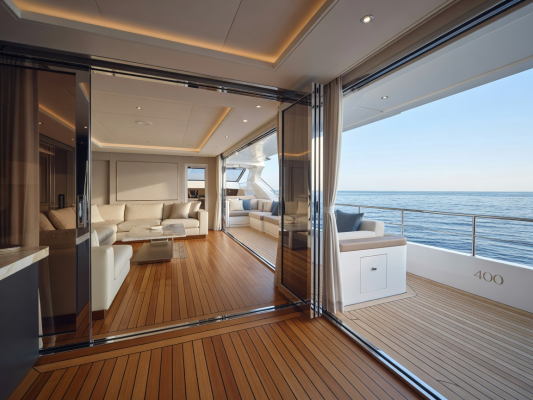
The primary appeal of yachting is a deep, unhindered connection with the marine environment. However, traditional vessel design often heavily compartmentalized interior safe zones from exterior exposed decks. Today, experience-first design actively seeks to dissolve this boundary, creating fluid, continuous spaces that adapt to the elements rather than retreating from them.
The Engineering of Pocketing Glass
The physical barrier between the main salon and the aft deck is traditionally marked by heavy, watertight sliding doors. Modern engineering allows for massive panels of curved, floor-to-ceiling glass that can retract entirely into hidden structural pockets within the bulkheads. When opened, the physical separation between the conditioned interior and the ocean breeze completely vanishes.
Achieving this requires immense structural rigidity in the deck above to prevent sagging when the glass is removed, as well as flush-threshold tracks that prevent tripping and allow a continuous visual sweep of the floor.
Visual and Material Continuity
To successfully trick the mind into perceiving the indoor and outdoor areas as a single space, material continuity is essential. If the main salon features a light oak floor, transitioning abruptly to traditional caulked teak on the exterior creates a visual hard stop.
Instead, designers utilize matched materials—such as extending resin-infused stonework or similarly toned composites from the interior directly out to the gunwales. Furniture groupings are designed to span the threshold, placing half of a seating arrangement inside and half outside, unifying the zones functionally as well as visually.
Climate Transition Zones
Removing the physical barrier introduces significant climate control challenges. Opening massive doors allows conditioned air to escape and introduces humidity. To counter this, advanced vessels employ 'air curtains'—high-velocity, invisible streams of cooled or heated air blown vertically across the threshold.
Furthermore, exterior decks are increasingly treated as primary living spaces, equipped with subtle wind-deflection glass panels, integrated radiant deck heating, and overhead cooling misters. This creates a comfortable micro-climate on the exterior that closely mimics the interior temperature, encouraging guests to utilize the space regardless of the prevailing weather conditions.
Key Integration Elements
- Continuous Sightlines: Dropping exterior bulwarks and utilizing glass balustrades to ensure uninterrupted views of the water from a seated position inside.
- Unified Lighting: Extending interior lighting schemes and color temperatures out onto the deck to prevent the exterior from feeling like a separate, dark void at night.
- Automated Shade: Integration of structural overhangs and automated louvers to control glare and thermal gain without obstructing the view.
By effectively blurring the boundary between interior luxury and the natural environment, designers maximize the usable footprint of the vessel and deliver the immersive connection to the ocean that owners ultimately seek.