Lighting Choreography on the Water
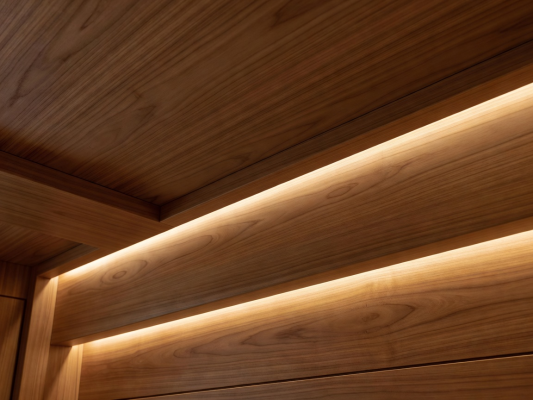
Light is arguably the most powerful medium for altering the perception of a space. In marine architecture, lighting design is complicated by reflective water surfaces, shifting natural light angles, and low structural deck-heads. To overcome these challenges, lighting must be treated not as a utility, but as a choreographed performance that evolves throughout the day.
Circadian Rhythm Integration
Traveling across time zones or spending prolonged periods enclosed within structural hulls can disrupt human circadian rhythms. Experience-first design leverages tunable white LED technology to biologically align the interior environment with natural solar cycles.
During morning hours, lighting systems deliver cool, high-intensity light (around 5000K-6000K) to suppress melatonin and promote alertness. As the day progresses, the color temperature warms, eventually shifting to deep, amber hues (2200K-2700K) in the evening. This automatic, subtle transition encourages relaxation and prepares guests for sleep, fundamentally improving their physiological comfort.
The Art of Concealment
The contemporary ideal is to experience the effect of the light without ever seeing the source. Visible downlights—often referred to as 'ceiling acne'—create harsh shadows and detract from the architectural purity of a space. Instead, lighting choreography relies on concealed fixtures.
Cove lighting, deeply recessed trimless spotlights, and perimeter washes are utilized to bounce light off bulkheads and deck-heads. This indirect approach softens the illumination, visually expands the ceiling height, and highlights the tactile qualities of the interior materials without causing glare on televisions, artwork, or windows.
Managing Glare on the Water
Yachts are surrounded by highly reflective surfaces: the ocean, polished exterior decking, and extensive glass structures. Uncontrolled interior lighting at night can turn panoramic windows into opaque black mirrors, completely severing the connection to the outside environment.
Advanced lighting scenes address this by reducing ambient interior levels and focusing illumination solely on task areas, such as dining tables or reading nooks. Simultaneously, subtle exterior lighting—illuminating the surrounding water or the vessel's superstructure—balances the contrast, allowing guests to look out through the glass into the night.
Essential Lighting Layers
- Architectural Wash: Soft, indirect light that defines the volume of the room.
- Focal Illumination: High-CRI spotlights to accurately render the colors of artwork and fine dining.
- Low-Level Wayfinding: Amber, floor-level markers that provide safe navigation at night without waking the brain.
Intelligent lighting control systems tie these layers together. Rather than presenting the user with banks of complex dimmer switches, modern interfaces offer curated 'scenes'—such as "Evening Anchor," "Dining," or "Cinema"—that seamlessly balance the layers to instantly set the appropriate mood.